Student Spotlight: Sam Bresnick (MASIA ’22)
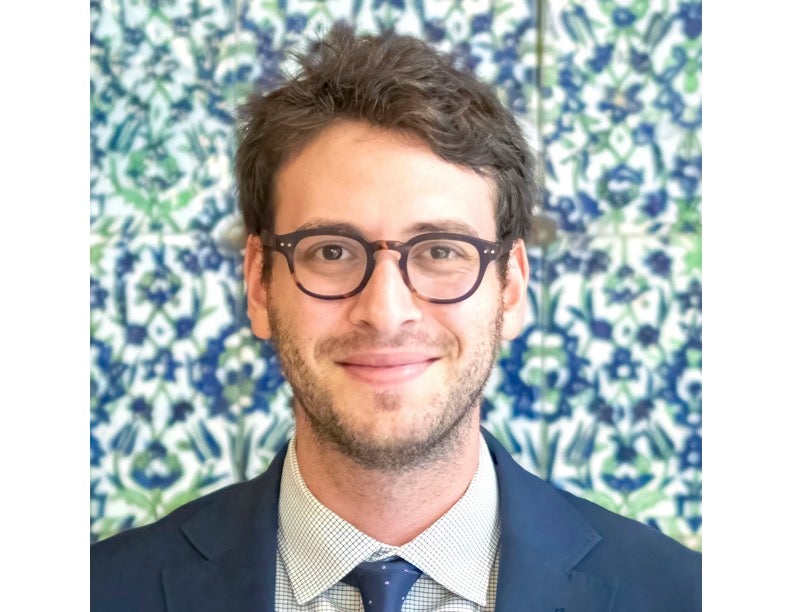
Sam Bresnick received his Master of Arts in Asian Studies in 2022 and is now a Research Fellow and Andrew W. Marshall Fellow at Georgetown’s Center for Security and Emerging Technology. He was previously a Senior Research Analyst at the Carnegie Endowment and has lived in China, Sri Lanka, and Thailand. He holds an A.B. in Comparative Literature from Brown University and is pursuing a J.D. at the Georgetown University Law Center.
Tell us a little about yourself. How’d you get started studying Asia and China? Why did you decide to pursue a graduate degree in Asian Studies?
So my story is a bit winding. When I graduated from college, I wanted to live abroad in Asia. I had originally studied French literature, but I spent some time there and quickly realized I didn’t want to live in Europe. I preferred a change of scenery, and during college I had the chance to visit a friend in Korea and go on a trip to Japan. After that, I figured Asia is where it’s at. I graduated and then did a Princeton in Asia Fellowship, spending a year in Thailand teaching English and then another year in Sri Lanka working as a journalist.
From there, I moved to China and got a job at the Carnegie-Tsinghua Center for Global Policy. I had already done teaching and journalism, and after doing editing and foreign policy research, I figured out that I wanted to do it for a living. I worked at Carnegie for two and a half years before realizing that to move up in this field, you need to have a master’s degree. So I did some research, came across the MASIA program, and applied. It seemed like the perfect program to advance my career in the China/foreign policy/international affairs world. Now, I work at Georgetown’s Center for Security and Emerging Technology (CSET), where I help lead our work on China, technology, and national security.
What about MASIA and Georgetown specifically made it such a good fit for you?
One factor was the faculty, which is truly exceptional. When you’re in think-tank world long enough, you realize how many of the MASIA faculty members are active in the policymaking and academic communities and how driven they are in their work. One of my former bosses previously worked previously with a professor in the government and recommended I apply. Being in DC was also attractive; if you’re going to do a master’s degree in Asian studies and you want to be in the think tank or government space, there’s no better place to go than the Asian Studies Program at SFS.
What was your time like in and after MASIA? Obviously you had an untraditional experience during COVID.
To put it diplomatically, I had a different experience given the pandemic. My first year was completely online. I believe I am the first and probably only student to do their first semester almost entirely from Sri Lanka remotely, because that was the fall of 2020. I would have preferred to be in-person, but the program did a good job of rolling with the punches and figuring out how to still give us an excellent education via Zoom.
Then, I moved down to DC for the second year and had a great time meeting my classmates in person. I made many friends and formed really close links with professors, many of whom I still keep in touch with, such as Professors Looney, Tajima, Green, and Medeiros. I’m still very much in the orbit of the program and even see Robert from time to time at the MASIA mixers, so I still generally enjoy the extended MASIA community. In fact, a MASIA student worked with me right CSET this past year, so I definitely try to keep up with the community and work with students where I can.
Do you think the MASIA community has helped you?
Definitely. Outside of teaching me to be a better thinker and analyst, as well as with mundane things like being professional references, the community has been very supportive in my career. MASIA definitely puts people in a position to succeed after they graduate.
How did the program prepare you for the work that you do now?
I would say three major ways. Communicating is the first major skill I use all the time, especially at CSET where I have to structure and write reports that are often read by policymakers.
Secondly, the classes that I found most useful were on how the Chinese political system works, so I really value the Chinese politics classes at Georgetown. There was a class I took with Professor Looney where we read a book a week during the pandemic. You would think with a book a week, most people aren’t reading the entire book. But I had nothing to do, so I read each book every time. There were 5 people in the class, and we met on Friday afternoons for two and a half hours, so if you didn’t read that book it was very obvious.
So I learned a great deal. First was gaining a much better understanding of the drivers of the Chinese political system, the incentive structures, and how it differs from the American political system. I think if you’re a China analyst, no matter what you’re doing, understanding as much about the political system and the incentives that people at different levels face is absolutely crucial. MASIA gave me a much better understanding of those dynamics.
Thirdly, I took a bunch of classes on Southeast Asia. I lived in Thailand for a year, and I have traveled all over Southeast Asia, but I’d never studied the region. My classes were fascinating—it was my second major because I concentrated in Politics and Security. Gaining a better understanding of the perspectives in the region was useful. It’s sort of a cliche, but I think if you’re in U.S.-China world all the time, you can take for granted what other countries are doing and thinking and not even consider them. So it is quite important to sit down and say: “Okay, where does Indonesia sit in the context of the U.S.-China rivalry? Where do they plug in?”
What were your favorite classes at Georgetown?
Probably Professor Looney’s class and Professor Medeiros’s research seminar. He really taught us how to come up with a research question—how to stress-test it against all kinds of critiques, mobilize data to paint a picture of what’s going on, and try to answer your research question. In his class, I did a study on Chinese military diplomacy with Vietnam, Thailand, the Philippines, and Indonesia. That really taught me how to do detailed academic research. I actually presented that project to CSET during my interview and it helped me get my job. So that’s a very direct, concrete way MASIA benefited my career.
Both of those classes were very helpful, especially in forcing you to read thoroughly, digest arguments, and ensure your own arguments are rigorously backed with evidence.
Besides academics, what was your favorite part of the MASIA experience?
It was great to be in an environment where you could go outside of school and still have access to a huge number of events and people who are interested in the same things that you are. Being in Beijing was awesome, but it wasn’t quite the same because it’s such a giant place. It was harder to find those kinds of things sometimes.
But that’s what I like about DC to this day: it’s very easy to find people who are working on similar issues, people who are interested in similar things. And having professors and peers at Georgetown who were also very invested in the issues that I was interested in made it an excellent learning environment and place to live.
Any advice for current and potential students?
Something that concerns me is that it’s so competitive. I talk to people sometimes who think they should do very specific research just because other people aren’t doing it. And I think that is partially correct, but probably not the right move in the end because you need to like and be interested in what you’re doing. The key is to find something that you are passionate about but that also gives you growth opportunities.
So I try to encourage younger people to try to balance between those two imperatives and do something that there are fewer people doing—as it might be easier to break through—but then make sure that they’re really invested in that area and not just doing it because you think it’ll be easier to find a job or make a career out of it. Because if you don’t love what you’re doing, you’re not going to succeed in the way that you need to.
The other thing I do think is important now, which wasn’t the same when I was starting out in the think tank world almost eight and a half years ago, is that it was still probably enough to just study China and one other topic. For example, it was enough to study just U.S.-China relations or just Chinese economics. But now you have to have another set of expertise. So I study U.S.-China, but then I study Chinese tech as well. It’s competitive in a way where you really need to have more expertise now to differentiate yourself than before. It’s a bit intimidating, and that’s why people make these decisions. I recently interviewed someone who says they want to study Chinese biotech because there are very few people studying the nexus of China and biotech. But do you really want to study biotech or are you just studying it because you think it’ll be easier to get a job? That’s always the dilemma.
But anyway, that’s all for me.